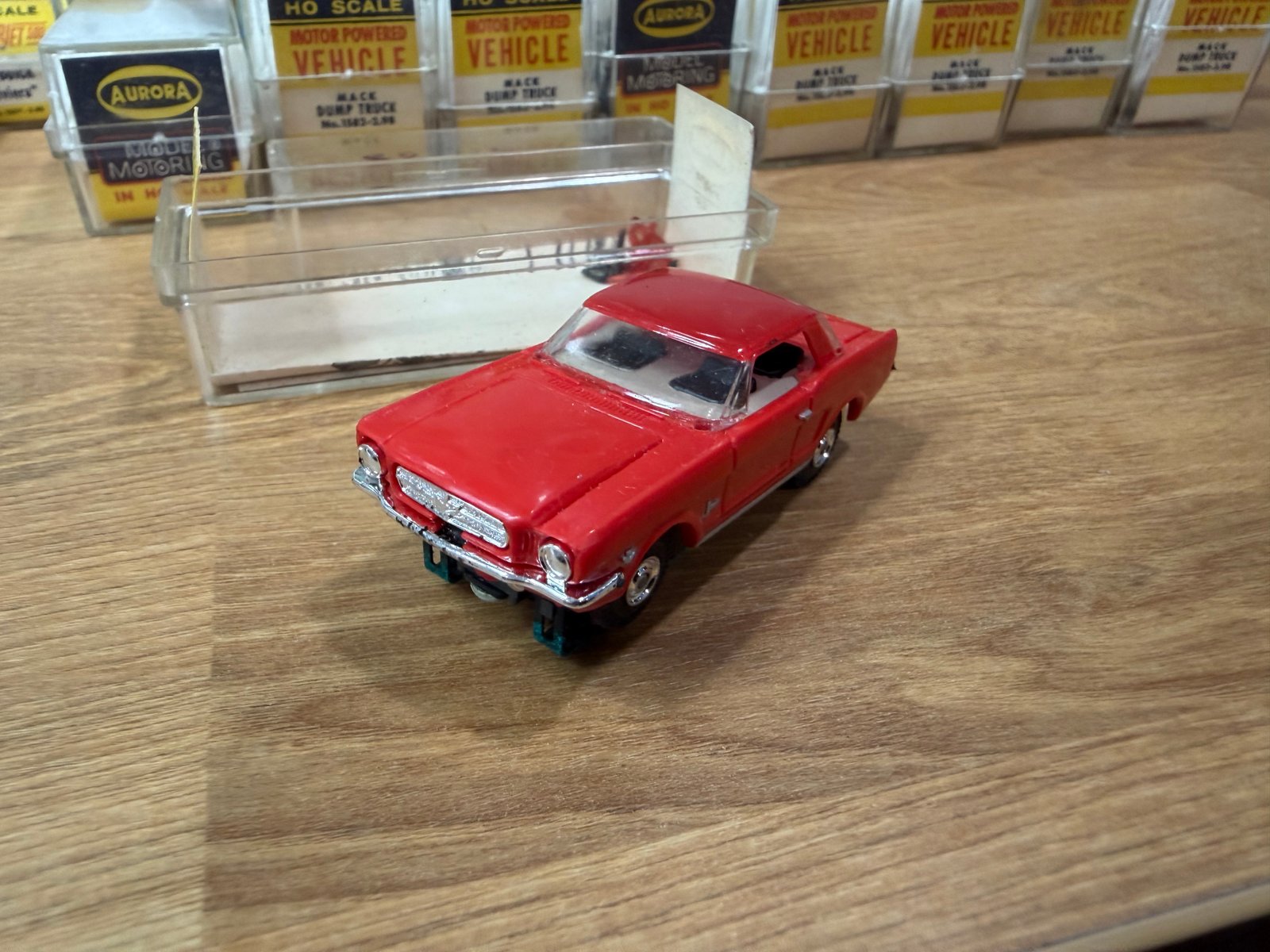
What Makes a Vintage Slot Car More or Less Valuable
Not every old slot car is automatically valuable, and not every rough-looking one is worthless - the factors that actually matter are more specific than just age. Manufacturer and model line come first: some 1960s and 1970s cars were produced in huge numbers and remain common today, while others from the same era were limited runs or short-lived product lines that are genuinely scarce.
Original parts matter more than most people expect. A vintage car with its original chassis, wheels, and guide pin - even if the paint is worn - is generally worth more than a similar car that's been reassembled with mismatched or reproduction parts over the years. That's not always obvious from a casual look, which is part of why an actual appraisal matters more than a guess.
Packaging helps but isn't everything. An original box, especially with inserts or paperwork, can meaningfully increase a vintage car's value - but the majority of what gets appraised here arrives loose, without packaging, and that's completely normal. Don't assume a car isn't worth asking about just because the box is long gone.
Provenance - where a car came from - occasionally matters too, particularly for well-documented collections or cars tied to a specific racing history. Most sellers don't have this kind of documentation, and that's fine; it's a bonus when it exists, not a requirement to get a fair offer.